
Most legal outcomes are decided before a court examines the evidence, before a jury hears the facts, and before anyone argues what actually happened. The machinery that produces outcomes runs on doctrines too abstract for most people, administered by institutions with strong incentives to keep them obscure, whose product is a gap between the right the Constitution names and the remedy the legal system provides. ‘Before the Merits’ strips down the American legal machine to its component parts one case at a time, for general readers to discover how a precedent-based system is run and maintained.
Before the Merits—Walden v. Fiore, 571 U.S. 277 (2014)
A government officer can seize your money in Georgia, use a false document to hold it for seven months while you live in Nevada, and the Constitution will prevent you from suing him in the state where you experienced every day of that deprivation. This result is not a gap in the law or an oversight waiting to be corrected; it is the intended operation of a doctrine that has governed civil litigation since 1945, sharpened by later decisions into something that many plaintiffs encounter without understanding until the case is already over. The doctrine answers a question most people have never thought to ask: not whether you were wronged, not whether the wrong was provable, but whether the court you chose to enter is permitted to hear you at all. That threshold question — which sounds administrative and feels devastating — is decided by rules that track the defendant’s geography, not the plaintiff’s injury, and the gap between those two measures is where most people’s intuitions about fairness part ways with the law’s answer. The skill this essay delivers is the ability to read any civil complaint involving a defendant who acted somewhere other than where the plaintiff lives and identify, before the merits are ever examined, the jurisdictional obstacle the plaintiff may not have seen coming.
Case Header:
- Case Name: Walden v. Fiore
- Citation: 571 U.S. 277 (2014)
- Court / Jurisdiction: Supreme Court of the United States
- Date Decided: February 25, 2014
- Docket No.: No. 12-574
Legal Domain(s):
- Primary Issue(s): Personal Jurisdiction / Specific Jurisdiction / Due Process / Minimum Contacts / Intentional Torts
- Practice Area: Federal civil procedure; constitutional law; Bivens actions; Fourth Amendment
- Procedural Posture: Certiorari to the Ninth Circuit, which had reversed a district court dismissal for lack of personal jurisdiction; Supreme Court reversed the Ninth Circuit and reinstated the dismissal
Holding (One Sentence Rule):
For a state to exercise specific personal jurisdiction consistent with the Due Process Clause, the relationship between the defendant, the forum, and the litigation must arise out of contacts that the defendant himself created with the forum state—not with persons who happen to reside there—and the plaintiff cannot be the only link between the defendant and the forum.
Precedent
The most counterintuitive feature of American civil litigation is that a court’s authority to hear a case has nothing to do with the merits of the case, and a plaintiff with an airtight claim can lose before the argument begins simply by choosing the wrong courtroom.
This was not always the law’s arrangement. The common law tradition that American courts inherited treated jurisdiction as a matter of physical presence: a defendant who could be served with process within a jurisdiction’s territory was subject to its courts, full stop. The rule was clean, mechanical, and deeply inconvenient for an industrializing economy in which corporations conducted business across state lines without ever being physically present in any single state in the way that a natural person could be. A firm incorporated in Delaware but manufacturing in Ohio and selling in California could, under the old territorial rule, be hauled into court only in the state of its incorporation — leaving plaintiffs injured by its Ohio operations with the burden of litigating in a jurisdiction they had never entered, before courts with no particular connection to the controversy.
The Supreme Court resolved this inconvenience in 1945 with a ruling that established the foundational principle that still governs every civil lawsuit in the American federal system. The case involved a state tax authority seeking to collect unemployment contributions from an out-of-state shoe company that employed salespeople who operated within the state but did not maintain a fixed office there. The Court held that a state may exercise personal jurisdiction over a nonresident defendant when that defendant has sufficient “minimum contacts” with the forum state that the exercise of jurisdiction comports with “traditional notions of fair play and substantial justice.” The standard was deliberately flexible, designed to track the defendant’s voluntary, purposeful engagement with the forum rather than the accident of physical presence.
The flexibility the standard offered was also its instability.
“Minimum contacts” and “fair play and substantial justice” are phrases that invite rather than resolve argument. Lower courts spent the following decades applying them inconsistently, expanding and contracting the circle of permissible jurisdiction in ways that were difficult to predict from the defendant’s position at the moment of the allegedly wrongful conduct. The Supreme Court issued periodic corrective opinions, each of which clarified some aspects of the doctrine while creating new ambiguities in others. By the 1980s, the Court had developed specific jurisdiction—based on claims arising directly from the defendant’s forum-related conduct—as distinct from general jurisdiction, which required a more pervasive and continuous forum presence but could support any claim regardless of its connection to the forum.
The distinction between specific and general jurisdiction created a question that the minimum-contacts framework had not fully answered: when a defendant’s wrongful conduct occurs entirely outside the forum state but causes harm that the plaintiff experiences inside it, which fact is constitutionally relevant … the defendant’s location … where the act occurred … the plaintiff’s location … where the injury was felt … something else?
The answer the Court gave in 1984, in a case involving a tabloid article about a California actress written by Florida journalists, appeared to solve the problem by focusing on where the harmful effects were directed and felt. That answer turned out to create at least as many problems as it resolved. The case that followed thirty years later was the Court’s attempt to close the door the earlier decision had left open.
Doctrine
Walden v. Fiore, 571 U.S. 277 (2014), arrived at the Supreme Court as a dispute between a Georgia police officer and two professional gamblers from Nevada, and it left as a unanimous ruling that restructured the jurisdictional geography of civil rights litigation in America.
The facts are specific enough to reward close attention. Gina Fiore and Keith Gipson, professional gamblers, were traveling through Hartsfield-Jackson Atlanta International Airport in August 2006 when Sergeant Anthony Walden, a Georgia police officer who had been deputized as a DEA task force agent, stopped them and seized approximately ninety-seven thousand dollars in cash. Walden suspected the money was connected to drug activity; no drugs were found; no charges were filed. The money was not immediately returned. Instead, Walden helped prepare a probable-cause affidavit in Georgia supporting civil forfeiture of the funds. The affidavit was, the plaintiffs alleged, materially false. No forfeiture complaint was ever filed. The money was returned approximately seven months after the seizure, after lawyers had intervened.
Fiore and Gipson, Nevada residents who experienced those seven months of deprivation in Nevada, filed a Bivens suit—a federal damages action against a federal officer for constitutional violations—in the U.S. District Court for the District of Nevada. Walden moved to dismiss for lack of personal jurisdiction. He had never been to Nevada. His conduct—the airport stop, the seizure, the affidavit—occurred entirely in Georgia.
Walden’s connection to Nevada ran solely through the plaintiffs: they lived there, they suffered the deprivation of their funds there, and he knew they lived there.
The district court dismissed. The Ninth Circuit reversed, reasoning that Walden’s knowledge that the plaintiffs were Nevada residents, combined with his preparation of a false affidavit that he knew would prolong their deprivation in Nevada, was sufficient to create personal jurisdiction. The Supreme Court unanimously reversed the Ninth Circuit.
Justice Clarence Thomas, writing for a nine-justice Court with no concurrences and no dissents, held that the Due Process Clause requires the defendant’s contacts with the forum to arise from the defendant’s own relationship with the forum state, not from the defendant’s relationship with the plaintiff who happens to reside there. The rule the Court announced has a quality of plain-English simplicity that makes it sound obvious in the abstract and devastating in application: “the plaintiff cannot be the only link between the defendant and the forum.” Knowing that a plaintiff resides in Nevada, and knowing that the plaintiff will experience the consequences of the defendant’s Georgia conduct in Nevada, does not create a Nevada contact for the defendant.
The consequence of harm touching the forum, the Court held, is not the same as the defendant touching the forum.
The Court distinguished the 1984 libel case involving the California actress by pointing to a difference that is real but narrow: in that earlier case, the Florida journalists had written an article specifically about a California resident’s California activities, drawing on California sources, targeted at California readers, published in a magazine with its largest circulation in California. Their conduct, the Court said, was “expressly aimed at California”. The forum was the target of the allegedly tortious act, not merely the home of the person harmed by it.
Walden’s conduct, by contrast, was aimed at Fiore and Gipson, not at Nevada. The seizable cash was in Georgia. The false affidavit was prepared in Georgia. Nevada was where the plaintiffs happened to be when the consequences arrived.
The unanimity of the ruling is itself a piece of evidence.
No justice found the result troubling enough to write separately. The doctrine, as applied, produced no internal friction at the level of the Court that decided it. What it produced instead was a result that is difficult to explain to anyone who has not already internalized the framework: a government officer who used a false document to hold your money for seven months cannot be sued in the state where you lived through every day of that experience, because the false document was written somewhere else.
Revival
The doctrine does not end where the opinion ends, and the channels that survived Walden are as important as the rule it announced.
The most significant surviving avenue is venue itself. Personal jurisdiction determines whether a court has constitutional authority over the defendant; venue determines whether a court is the proper forum for the dispute even when jurisdiction exists. Federal venue rules permit suit in any district where a “substantial part of the events or omissions giving rise to the claim occurred,” and courts have sometimes treated the plaintiff’s experience of harm—the ongoing deprivation of money, the continuing effect of a false document—as a venue-qualifying event even when it cannot serve as a jurisdiction-qualifying contact. The overlap is imperfect and contested, but it creates room to maneuver in cases where the plaintiff’s home forum is not constitutionally available under Walden.
The purposeful-direction test the Court preserved from the 1984 libel case retains its vitality in a form that matters increasingly in the digital era. An online actor who targets a forum-state victim through conduct calculated to cause harm in a specific location presents facts closer to the libel-case model than to the airport-seizure model. A defendant who sends fraudulent communications to a known forum-state resident, who harasses a known forum-state target through platforms that deliver content to that state, or who interferes with a forum-state business relationship by acting on and against forum-state parties—each of these presents a purposeful-direction argument that Walden does not foreclose. Lower courts have split on how much directedness is required.
The Supreme Court has not resolved the question, which means the outer boundary of Walden‘s rule remains genuinely open.
The structural weakness the ruling exposes is sharpest in cases involving mobile victims of stationary wrongdoers—civil rights plaintiffs who were in transit when the wrong occurred, or who live in one state while the wrong was committed against them in another. For these plaintiffs, the post-Walden landscape requires filing suit in the state of the defendant’s conduct, which is often a state with which the plaintiff has no practical connection, no local counsel, and no community context for a jury.
The burden of litigating in an unfamiliar forum is not a constitutional objection. Due process protects defendants from being haled into courts with which they have no connection, not plaintiffs from being required to follow wrongdoers into their home jurisdictions. The burden is real, however, and it falls asymmetrically on plaintiffs who are less likely to have resources to manage it.
Exposure
The decision exposes a structural feature of personal jurisdiction doctrine that the minimum-contacts framework has always contained but rarely stated directly: the doctrine is built to protect defendants from inconvenient forums, and no equivalent protection runs in the other direction.
This asymmetry is not accidental. The constitutional doctrine of personal jurisdiction is derived from the Due Process Clause of the Fourteenth Amendment, which protects persons from deprivations of liberty or property without due process of law. The Court, beginning in 1945, read this clause to protect defendants from being compelled to litigate in forums with which they had no meaningful connection, a reading that treats the defendant’s liberty interest in not being hauled across the country as the constitutionally protected value. The plaintiff’s liberty interest in litigating close to home, or close to the evidence, or in the community that witnessed the harm, has no parallel constitutional protection. Plaintiffs choose forums subject to the constitutional constraints on defendants, not their own.
The practical consequence of this asymmetry is visible in Walden‘s facts. Anthony Walden operated as a deputized federal agent at a major international airport that connects travelers from every state. His conduct could affect residents of any jurisdiction in the country simply by virtue of the airport’s geographic function. A rule that located jurisdiction in the defendant’s home state—Georgia—effectively insulated all conduct at Hartsfield-Jackson from litigation anywhere except Georgia, because every out-of-state traveler who passed through that airport and encountered misconduct would have to litigate in a state they had never voluntarily entered. The Court acknowledged this consequence without finding it constitutionally objectionable.
Due process, it held, protects the defendant from Georgia, not the plaintiff toward Nevada.
What the ruling also exposes is the relationship between jurisdiction doctrine and the effective enforceability of constitutional rights against government officials. A Bivens action is already a procedurally constrained remedy—it is available only for federal officers, only in contexts the Supreme Court has recognized, and is subject to qualified immunity in the same form that governs § 1983 actions against state officials. Adding the jurisdictional constraint of Walden—requiring the plaintiff to litigate in the state of the defendant’s conduct—compounds a remedy that was already narrow.
Fiore and Gipson, who had their cash seized under a false affidavit and received it back seven months later only after retaining counsel, could not obtain a damages judgment in any court. They could not overcome jurisdiction in Nevada. They could not, on the record, establish that the conduct violated clearly established law in a way that would defeat Walden’s qualified immunity. The cascade of doctrines—jurisdiction, immunity, the narrowing of Bivens itself—produces a system in which government officers who commit constitutional violations in transit corridors are structurally protected by the geography of their own conduct.
The exposure is not the injustice of any single outcome; it is the revelation that the procedural architecture of civil rights enforcement contains multiple, mutually reinforcing filters, each individually defensible, that collectively reduce the realistic prospect of recovery to something far thinner than any single doctrine would suggest if read in isolation.
Deviation
Lower courts apply Walden with a consistency that reflects the clarity of its core rule and an inventiveness that reflects the pressure the rule creates. Defendants in civil rights cases routinely move to dismiss for lack of jurisdiction in cases where the plaintiff filed in a home forum, and the motions succeed at high rates when the defendant’s conduct is localized outside the plaintiff’s state.
The digital environment creates the doctrine’s most active frontier. Courts confronting online harassment, targeted fraud, and remote interference with business relationships must decide whether the conduct was “expressly aimed” at the forum in the manner the 1984 libel case required, or whether it is the Walden model of harm-reaching-the-forum-through-the-plaintiff. The circuits diverge, producing a map in which the same online conduct—an email sent to a known resident of State X, a fraudulent wire transfer directed to a State X account, a social media campaign designed to damage a State X business—may or may not create State X jurisdiction depending on which circuit the plaintiff files in.
The Supreme Court has not resolved the question, and the proliferation of remote-harm cases since 2014 has widened the circuit split rather than narrowing it.
Corporate litigation adapts to Walden in ways the opinion’s authors presumably did not anticipate. Mass-tort plaintiffs filing in plaintiffs’ home states face jurisdictional challenges from out-of-state corporate defendants who rely on Walden‘s defendant-centered contacts framework to insist that corporate conduct in State X cannot be litigated in State Y simply because State Y residents were harmed. The Supreme Court’s 2017 decision limiting specific jurisdiction for nonresident plaintiffs against national corporations extended the Walden logic into the mass-tort context, producing consolidation of cases in manufacturer home states that imposes significant logistical burdens on plaintiffs who are geographically distributed across the country. The pharmaceutical manufacturer whose product caused harm in forty states need not defend forty state-court actions; it need defend only the actions brought in its home state, which is also the state where its records are, its witnesses are, and its lawyers are.
State courts experiment at the margins. Some states have enacted long-arm statutes that test the outer limits of what Walden‘s purposeful-direction test permits, interpreting the Supreme Court’s surviving “expressly aimed” language expansively to capture more categories of remote harm. Federal courts applying these statutes must determine whether the state’s jurisdictional reach exceeds the constitutional floor, which creates a second layer of litigation on top of the underlying merits dispute.
The jurisdictional question consumes resources, delays resolution, and sometimes—as in the Walden case itself—produces the definitive answer without ever addressing whether the plaintiff was actually wronged.
Remedy
The question is not whether Walden was correctly decided. The Court’s reasoning from its own premises is coherent, and the premises have been accepted for seventy years. The question is whether a doctrine built entirely around the defendant’s geographic relationship with the forum is the right architecture for an era in which harm travels faster than the actors who cause it, and in which the most consequential wrongs are often committed by people whose conduct never touches the place where the consequences are felt.
The minimum-contacts framework was designed for a world in which presence and action were geographically co-located—a shoe company operating in a state, a newspaper circulating in a city, a product manufactured and sold within a region. The central design question of that framework was how to prevent defendants from being haled into distant courts with which they had no genuine connection. The defendant’s geographic footprint was a reasonable proxy for the defendant’s voluntary engagement with a forum’s legal community, its courts, its norms, and its expectations of liability.
That proxy breaks down in at least two categories of cases that Walden cannot adequately handle, and both categories are growing.
The first is the case of the mobile government actor: an officer, agent, or official who exercises federal authority at transit points, in digital communications, or through instruments that reach plaintiffs regardless of where the plaintiffs are. Walden’s conduct at an international airport is the paradigm, but it extends to every form of federal enforcement that operates on traveling or remote populations. The plaintiff who experiences the consequences of federal misconduct in a state the federal officer has never entered is, under Walden, required to follow the officer home to seek redress—a requirement that the law treats as a due-process protection for the officer and a practical barrier for the plaintiff.
The second category is the remote tortfeasor of the digital age: an actor whose harmful conduct is committed entirely in one location but whose instruments of harm are precisely targeted at individuals in other locations. The 1984 libel case’s “expressly aimed” test was written for a world of physical publications with geographic distributions. Its translation into the digital context, where targeting is simultaneously more precise and more difficult to localize, has produced a decade of inconsistent lower-court decisions that the Supreme Court has declined to harmonize.
What would a jurisdiction doctrine adequate to these categories look like?
It would need to account for the plaintiff’s reasonable expectation of litigating close to the harm, not merely the defendant’s reasonable expectation of being free from distant courts. It would need a measure of directedness that does not depend on the physical location of the defendant’s act but on the deliberateness with which the defendant engaged with the plaintiff’s forum. It would need, in other words, a framework that treats the relationship between wrongful conduct and forum not as a question of where the defendant stood but as one of what the defendant chose—and what that choice imposed on the person who had to live with the consequences in a place the defendant never visited. Whether such a framework would survive the Court’s current reading of the Due Process Clause is a question the doctrine has not yet been asked to answer, because the doctrine has not yet been asked to look at the problem from the plaintiff’s side of the geography.
The gamblers got their money back. They never got a hearing on whether the affidavit was false. The officer who wrote it was never required, in any court, to justify what he did. That outcome is not a malfunction of the procedural system. It is what the procedural system produced when it operated as designed.
Understanding the design, rather than the malfunction, is the form of legal literacy the case delivers—and the literacy does not resolve in comfort.
For Further Examination
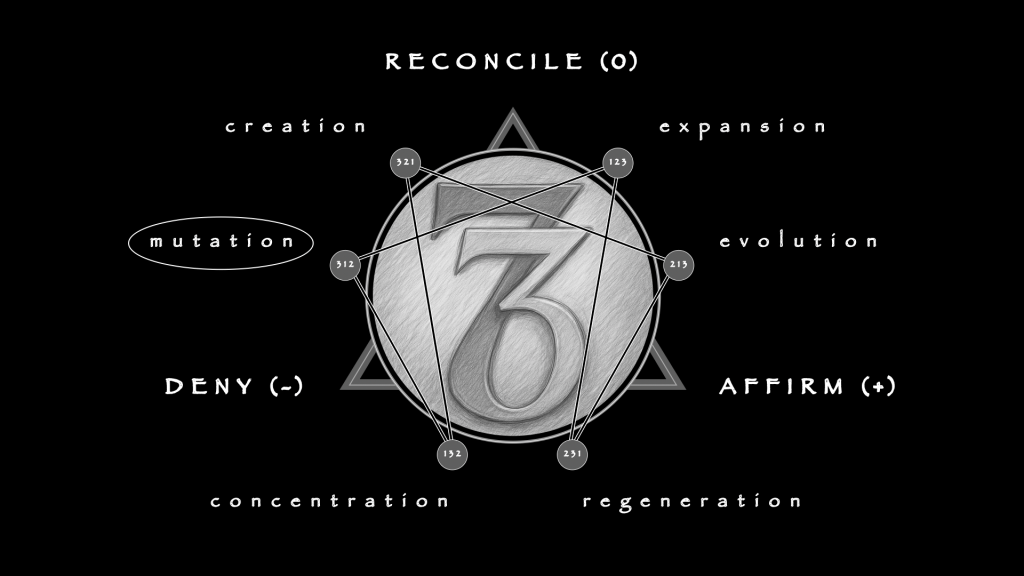
What Walden v. Fiore forecloses and what the law leaves open are not identical. The gap between them is where the next case will be born. Whatever specific circumstances generate it, the logos of any case has three components, each operating simultaneously as a field condition. Institutional Inertia (+) is already in motion, and Socioeconomic Pressure (-) defines the boundary conditions of that motion. These collide within a Cultural Justice Assumption (0) whose content varies but whose function does not.
Institutional Inertia is the affirming force.
The institutional condition is federal law enforcement operating in transit infrastructure—airports, highways, border crossings—where the government actor’s geographic base is structurally disconnected from the geographic base of virtually every person the actor encounters. DEA task force agents working at Hartsfield-Jackson interact with travelers from all fifty states, but they prepare their paperwork, submit their affidavits, and conduct their official business in Georgia. The institution’s internal incentive structure never confronts the jurisdictional consequences of this disconnect, because the consequences fall entirely on the plaintiffs, not the agency. An agency whose officers cannot be sued in the home forums of the people they stop is an agency insulated from a significant category of litigation pressure.
Socioeconomic Pressure is the denying force.
The social and economic pressure is the post-9/11 expansion of federal civil forfeiture and DEA enforcement at airports, producing a surge in cash seizures of travelers who could not immediately prove legitimate sources and who, in many cases, lacked the resources or legal sophistication to challenge the seizures in the state where they occurred. The legal infrastructure for challenging these seizures was being built in the early 2000s by organizations like the Institute for Justice; Walden arrived when that litigation had matured enough to test the jurisdictional limits of where such challenges could be brought.
The Cultural Justice Assumption is the reconciling force.
The cultural justice assumption is that procedural fairness consists in protecting defendants from unfamiliar forums—that the Due Process Clause’s historic function as a limit on state power over nonresident defendants is more constitutionally weighty than the plaintiff’s interest in litigating close to experienced harm. The unanimous Court treated this as uncontroversial. No justice dissented. The assumption was invisible precisely because it was shared. The fault line appears only in the academic commentary that followed, which identified the asymmetry the opinion neither acknowledged nor resolved.
If a federal officer at an international airport seizes cash from a traveler using a false affidavit, and the traveler cannot sue in the state where the traveler lives because the officer never entered that state, and cannot practically litigate in Georgia because the traveler has no connections there and no local counsel, and the Bivens cause of action is already narrowed by qualified immunity, what remedial mechanism—if any—is realistically available to the traveler, and is the answer different depending on whether the traveler has ninety-seven thousand dollars or nine hundred?
The personal jurisdiction doctrine protects defendants from litigating in forums with which they have no meaningful connection, which serves fairness and predictability; plaintiffs who are injured in their home states by defendants who never entered those states also have a legitimate interest in litigating close to the harm and the evidence that bears on it; if both interests are legitimate and they are structurally irreconcilable under the current doctrine, which institution is responsible for deciding between them, and by what principle should the decision be made?
If the purpose of civil procedure is to provide a fair and accessible mechanism for resolving disputes on their merits, and if jurisdictional doctrine — combined with immunity doctrine, pleading standards, and the narrowing of implied causes of action — collectively filters out most civil rights claims against government officials before any court reaches the merits, at what point does the cumulative effect of individually defensible procedural rules constitute a systemic denial of access to justice, and does the constitutional system contain any mechanism for recognizing that threshold when it is crossed?